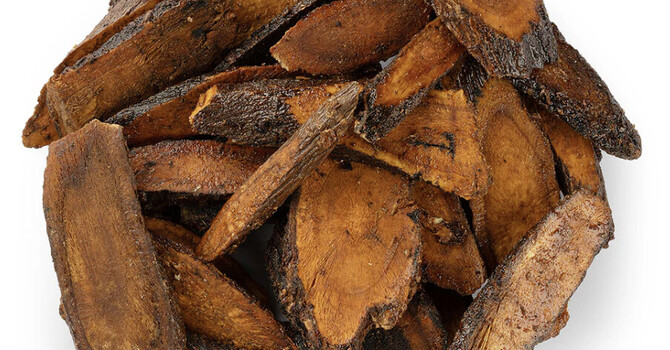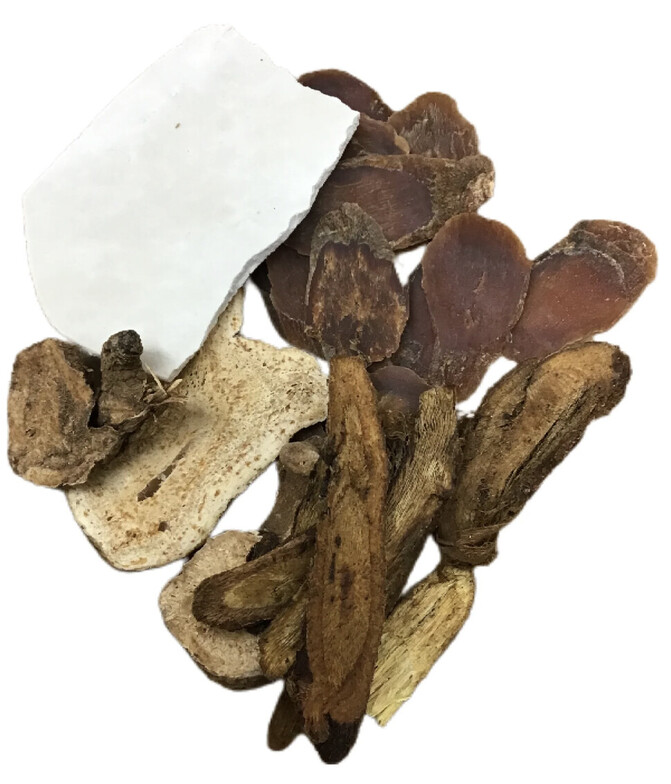
A recent study featured by ScienceDaily caught my attention for a very particular reason. Researchers screening thousands of compounds for inflammatory bowel disease discovered that a major compound found in black licorice root appeared remarkably protective to the intestinal lining. The compound, glycyrrhizin, reduced inflammatory damage, appeared to help stabilize the gut barrier, and protected intestinal tissue from inflammatory injury in experimental models.
To the average reader, this sounds like an intriguing new discovery.
To a Chinese herbalist, it sounds strangely familiar.
Because black licorice root, known in Chinese medicine as Gan Cao, has been sitting quietly inside digestive formulas for thousands of years. Not occasionally. Constantly. Once you begin studying classical Chinese herbal medicine, you notice something unusual very quickly: Gan Cao appears in formula after formula after formula. Digestive formulas. Immune formulas. Stress formulas. Respiratory formulas. Even formulas that seem to have nothing to do with the gut often contain it.
And for centuries, Chinese physicians described one of its major functions with an oddly simple phrase:
“It harmonizes the herbs.”
What Does “Harmonizing” Actually Mean?
At first glance, that sounds almost poetic. Maybe even primitive. But the deeper you go into herbal medicine, the more sophisticated that statement becomes.
Chinese herbal medicine was never traditionally based on single miracle herbs. It developed around formulas. Complex combinations of plants carefully balanced together to create a particular physiological effect. One herb moves circulation. Another reduces inflammation. Another nourishes fluids. Another calms spasm. Another protects digestion from becoming overwhelmed by the stronger herbs nearby.
Gan Cao often acts almost like the mediator of the group.
In clinical practice, Chinese herbalists have long observed that formulas containing Gan Cao tend to digest more smoothly, feel gentler on the stomach, and integrate more comfortably into the body’s systems. In traditional language, it “harmonizes.” In modern language, we might say it helps regulate inflammatory irritation, supports the mucosal lining, moderates harshness, and improves tolerance.
Different language. Same observation.
Why the New Research Is So Interesting
This is where the new research becomes fascinating.
The researchers were not studying ancient herbal theory. They were using modern stem-cell intestinal models and inflammatory disease frameworks. Yet they arrived at a conclusion that overlaps remarkably with traditional use: compounds within licorice appear capable of protecting delicate intestinal tissue from inflammatory stress.
That matters more than most people realize.
Modern medicine increasingly understands that the intestinal lining is not simply plumbing. The gut lining is an active immune interface. It helps regulate inflammation, communicates with the nervous system, shapes immune behavior, influences hormones, and determines what the body allows in and keeps out. When that barrier becomes chronically irritated, inflamed, or dysregulated, the effects ripple outward through the entire system.
Chinese Medicine Has Always Viewed Digestion as Central
Chinese medicine has always treated digestion as central for this reason.
Not because ancient physicians knew about cytokines or intestinal permeability. They didn’t. But they observed patterns relentlessly over centuries. They noticed that when digestion weakened, people became more inflamed, more fatigued, more reactive, more vulnerable, and slower to heal. They noticed that certain herbs consistently soothed irritation and helped the body handle complex medicinal combinations more effectively.
Gan Cao became one of the great “supporting actors” of Chinese herbal medicine because it seemed to help everything work together better.
Like Salt in Cooking
Like salt in cooking.
A tiny amount of salt does not merely make food salty. It changes the entire architecture of flavor. Suddenly ingredients that felt disconnected begin to integrate into something coherent and balanced. Gan Cao often behaves similarly inside Chinese herbal formulas. Not necessarily the loudest herb in the room, but the one quietly helping the whole system function more smoothly.
Herbal Medicine Is Still Medicine
And importantly, this does not mean people should start eating bags of black licorice candy for gut health. It can actually be dangerous. Chinese medical herbalists are highly trained.
Real licorice root is pharmacologically active. In excessive amounts, licorice root or glycyrrhizin can absolutely affect blood pressure, potassium levels, and fluid balance. Herbal medicine is still medicine. Dose matters. Context matters. Formulation matters.
This is another place where Chinese medicine tends to think differently than modern supplement culture. The goal traditionally was rarely “find the one active ingredient.” The goal was to create intelligent combinations that guide physiology gently in the right direction while minimizing collateral effects.
That systems-based thinking is one reason Chinese herbal medicine has remained clinically relevant for so long, particularly in chronic digestive and inflammatory conditions where reductionistic approaches often fall short.
Click to read the related article: Why Licorice Appears in Almost Every Chinese Herbal Formula
Kim Drolet
Contact Me